
Outdoor Expo Overbetuwe
Overbetuwe 1940-1945
Between two rivers: wartime stories from Overbetuwe
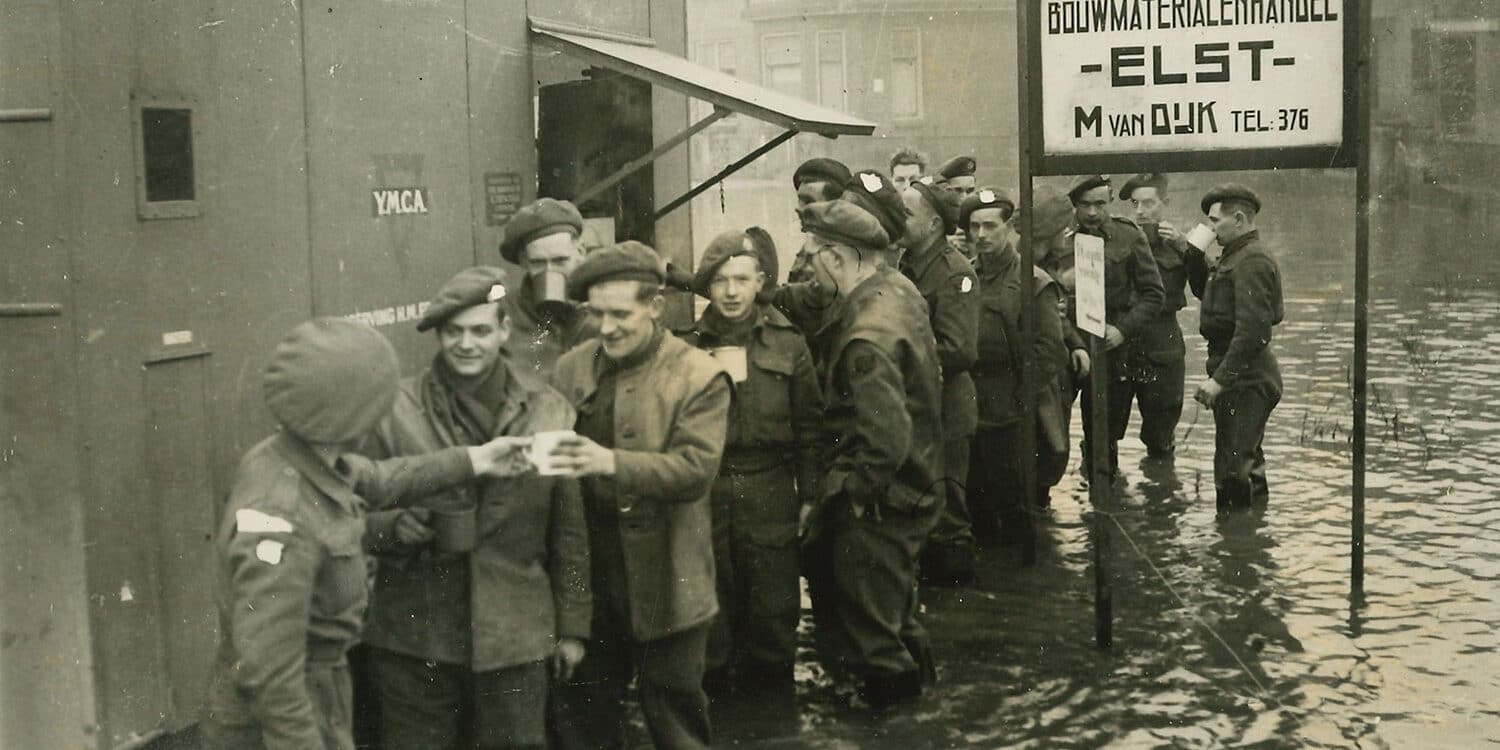

Overbetuwe was severely affected by the Second World War.
From 1940 to 1944, this region, like many others, witnessed the persecution of Jews, collaboration, shortages and resistance. After Operation Market Garden stalled in September 1944 it suddenly found itself on the front line and at the heart of the fighting.
With British airborne troops in a precarious situation near Arnhem, the 1st Polish Independent Parachute Brigade headed by General Sosabowski landed at Driel. They desperately tried to cross the Rhine to relieve their British comrades in Oosterbeek. Their heroic, but ultimately unsuccessful, battle is still commemorated to this day at the ‘Polish-Dutch Friendship’ memorial in Driel.
Following the partial failure of Operation Market Garden the Allies named the region ‘The Island’. For month after month, Overbetuwe, an island between the River Waal and River Rhine, remained a war zone that witnessed heavy fighting.
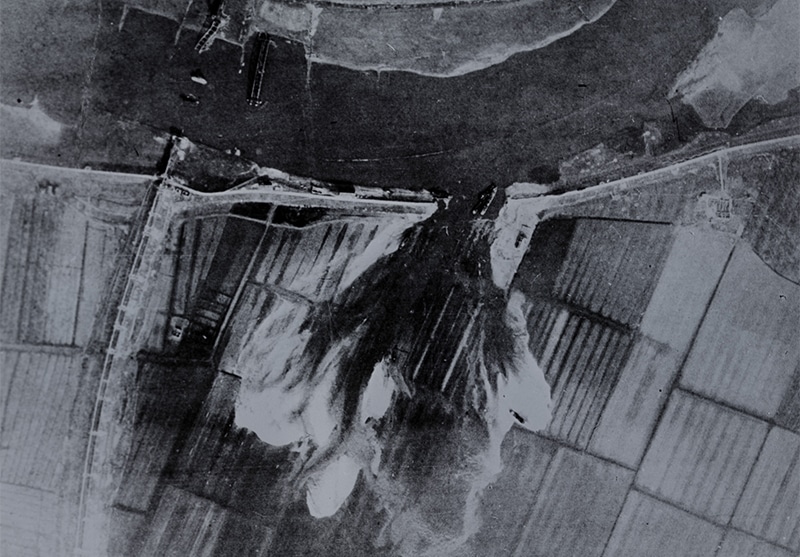
Operation Ooievaar: when water became a weapon
In December 1944 Paratrooper General Kurt Student was faced with a strategic challenge. As commander of the Germans’ 1st Parachute Division, he was tasked with halting the Allied advance from Nijmegen. His plan was as simple as it was risky: use the waters of the Rhine as a weapon.

Dying in hiding
In the winter of 1942 life became more and more dangerous for the Jewish Drielsma family from Elst. David Drielsma had already been forced by the Germans to sell his farmland. Around Christmas, his mother Esther and his sister Clara, who was the acting head of the Jewish School, decided to go into hiding in Nijmegen.

From stranger to one of the family: an evacuation story
“There was a certain distance there, between Catholics and Protestants, but never any hostility”, recalls Hans Peters van Nijenhof (1957). “In fact, a friendship developed that would span generations.”

Operation Pegasus: the evacuation across the Rhine
During the dark night of 22 October 1944, Polish soldier Stanislaw Kulik stood on the banks of the Rhine. He had been hiding on his own in occupied territory for five weeks. The river marked the boundary between imprisonment on one side and freedom on the other, the south bank. That is where the Americans from the 101st Airborne Division were located, who referred to the area as ‘The Island’.

Twelve days in a culvert
For ten-year-old Theo Sanders, September marked the beginning of a nightmare when his parents’ home in Elst found itself on the front line. Their house, close to the bridge over the River Linge, was caught up in the crossfire between German troops and Allied troops on the other side of the river. Theo’s parents therefore decided to make a hasty escape.

Headquarters at Schoonderlogt
In the autumn of 1944 the Schoonderlogt Estate, a country house and farm between Elst and Valburg, became the Allies northernmost command centre in the Betuwe region. This was where Major Dick Winters based his Easy Company, a battalion of the 506th Parachute Infantry Regiment (101st Airborne Division).